 DEAR FRIENDS OF ROSELAWN
In May, we will spotlight the Korean War and feature the stories of some of the Roselawn Veterans who served in it.
KOREAN WAR (1950 -1953)
As one reviews the history of the Korean War, we conclude that this war could be called “The War With No Resolution” because it ended with an armistice rather than a peace treaty.
The Korean War followed World War II, as Korea was divided at the 38th parallel. The Soviet Union supported a communist regime in the North, while the United States supported the South. The conflict was initiated on June 25, 1950, when the North Korean army crossed the 38th parallel, and the United Nations became involved. President Harry S. Truman was in office from 1945 – 1953 and sent forces under the United Nations sanction to repel the attack to support South Korea.
President Truman relieved General Douglas MacArthur of his command on April 11, 1951. The firing occurred due to insubordination and public disagreement over Korean War policy, as MacArthur advocated expanding the conflict into China. At the same time, Truman sought a limited war to avoid broader escalation and the possibility of WW III.
Within 13 months, by July 1951, battle lines stabilized near the 38th parallel, turning the war into a stalemate until the July 27, 1953, armistice agreement. Dwight D. Eisenhower took office in January 1953 and presided over the signing of the final armistice, which ended active combat on July 27, 1953.
The war concluded with the United Nations Command (representing the United States), China, and North Korea signing the agreement. Still, South Korea did not sign, and because they did not sign the peace treaty, North and South Korea remain in a technical state of war to this day, which has created one of the world’s most heavily armed borders, the DMZ.
The war left a devastating legacy with up to five million Koreans killed, a majority of whom were civilians and prisoners of war choosing not to return to the North.
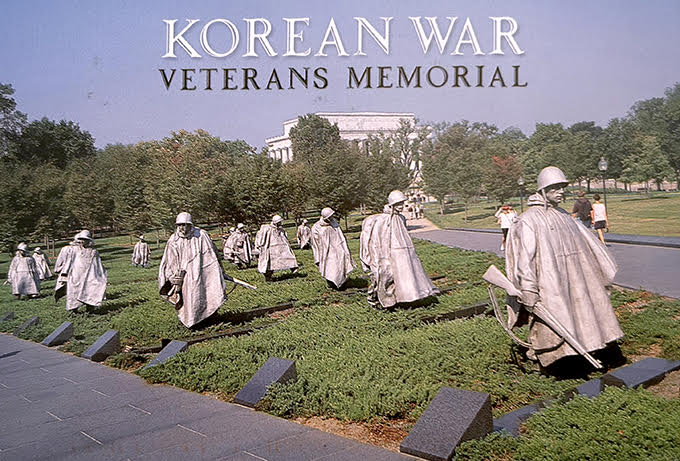
The Korean War Memorial in Washington, D.C., is a testament to the harsh winter of 1950-1951. The extreme cold weather was an enemy equal to or worse than the opposing Chinese and North Korean forces. Temperatures fell to 35-50 degrees below zero Fahrenheit, and 5,300 American troops suffered from frostbite, losing fingers, toes, and limbs. The subzero temperatures caused weapons to freeze and malfunction, vehicles to become inoperable, and medical supplies such as plasma and morphine to freeze. Our veterans said that the cold and the constant debilitating wind from Siberia required as much endurance as the combat itself and made it impossible to distinguish between casualties from fighting and those from freezing.
THE FOLLOWING ARE MEMORIES AND PHOTOS SHARED BY FAMILY
MEMBERS OF THE KOREAN WAR VETERANS WHOSE FINAL RESTING PLACE IS ROSELAWN’S SACRED GROUNDS
Note: the italics in each story are a testament to our veterans who chose to refrain from speaking of days spent in conflict
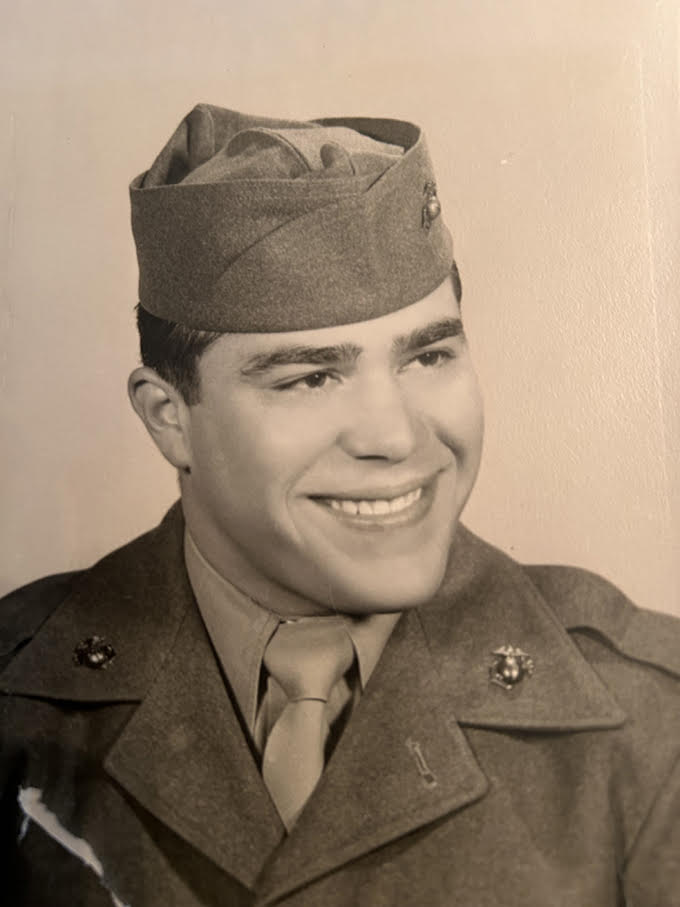
Charles Dionese (1932-2015)
My dad was a proud Marine, but he didn’t talk much about his time in Korea. He received numerous medals, which I have placed in a shadow box, and we treasure a tote that holds all the heartfelt letters he wrote to his parents. His letters referred to the men in his unit as family, reflected their close bond, and expressed his concern about the troops' lack of proper clothing during the unbearable winter cold. As we had the nuclear edge, he was thankful Korea never became World War III. Cooking was his passion, and the highlight of his days was being asked to cook for the officers. His honorable discharge lists his rank as Corporal.
Submitted by: Daughter Roxanne Dionese
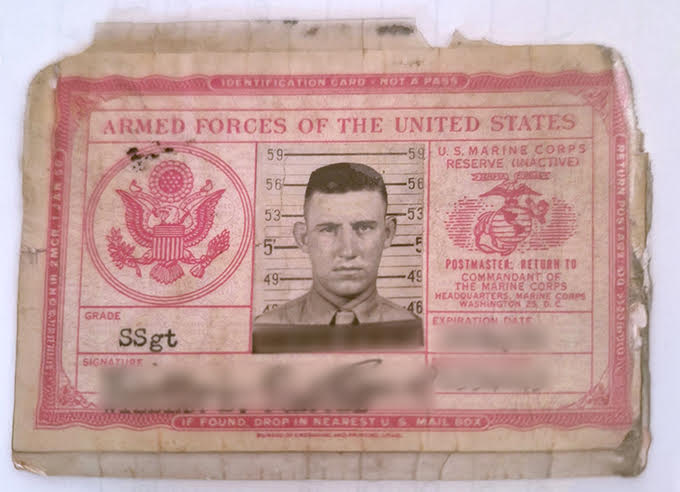
William E. Poeppel (1932 - 2006)
William joined the Marines after graduating high school in 1950, much to his parents' disapproval. He served in a tank battalion in Korea and, fortunately, returned in one piece. He finished his enlistment in San Francisco, escorting deceased Marines to their stateside homes. He loved being a Marine but hated Korea and shared very little of his Korean days. He served in the reserves for several years after his honorable discharge. He received the Korean Service Medal, the National Defense Service Medal, the Korean PUC, and the Good Conduct Medal.
Submitted by: Wife Anita Jagunich
Charles Edward Shomaker (1927 – 2013)
My Dad was known as “Babe,” and he owned and operated Shomaker Electric until his retirement. He served in Korea, but he didn’t talk about it much, as seeing the Korean children with very little clothing and sometimes naked in the freezing temperatures haunted his memory. One day, going through a box, I ran across a slingshot and asked my dad why he had it. It was one of the few times that he spoke about Korea. He said the rats in Korea were huge and that he’d never seen a rodent infestation to that degree. In self-defense, he made the slingshot to ward off the rats and kept it as a reminder that he was home and safe. War is hell on many fronts, and our veterans deserve to be honored, as they have endured living conditions and experiences that we cannot even imagine.
Submitted by: Son Craig Shomaker
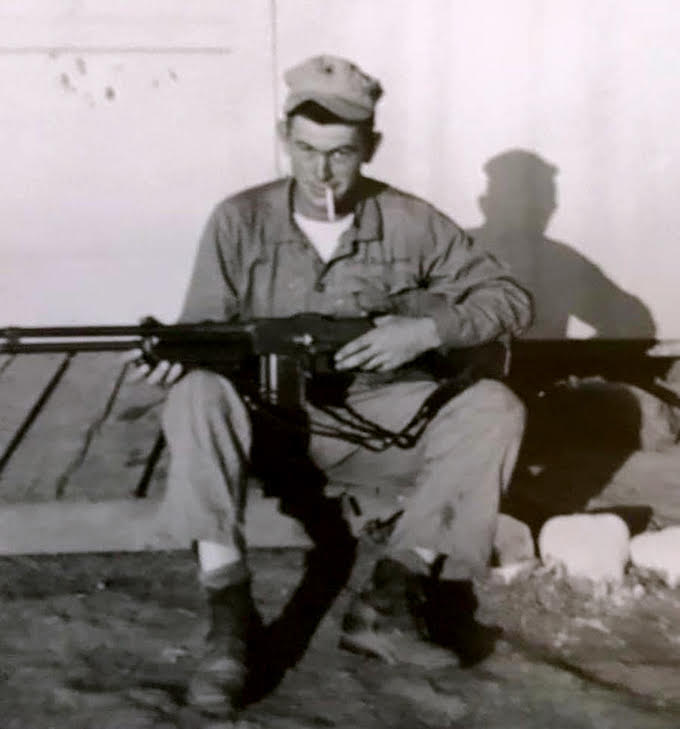
Carl Eldon Ruzanski (1931 - 1999)
Was born in Walsenburg, Colorado. He served with the Third Battalion, Seventh Marines, First Marine Division. He worked as a switchboard operator and wireman, a role that required him to be the first to move forward to lay communication lines so his fellow Marines could stay connected in combat. This was dangerous, as what looked like tree stumps often were hidden enemy soldiers. His duties required him to hang from low-flying helicopters to lay communication lines.
The loss of his personal friend from Pueblo during a land mine explosion was a reminder of the cost of war. Fortunately, Carl was spared and received a minor chin injury.
He was promoted to Corporal on June 28, 1952. Carl was awarded the Korean Service Medal, United Nations Service Medal, National Defense Service Medal, Good Conduct Medal, and Sharpshooter Medal, and honorably discharged in March of 1954.
Before the war, he was known as a skilled hunter and an excellent marksman. But after the war, he never hunted again, and he chose not to keep guns in his home. Though he did not often speak about his time in Korea, his service, sacrifice, and strength were evident in his actions and in the life he lived afterward. Carl Eldon Ruzanski served his country with courage and honor, and his story remains a lasting tribute to the resilience and dedication of those who have worn the uniform.
Submitted by: Daughter Debbie Watts
CONCLUSION:
As we conclude each month's spotlight on history, we have a better understanding of Wreaths Across America's motto:
REMEMBER the FALLEN * HONOR those who SERVED * TEACH our children the value of FREEDOM
The attached sponsorship form is provided.
2026 is the first year that Roselawn has offered the Family Tree Page as a sponsorship option. Your family name will be part of the Family Tree in the Wreaths Across America 2026 program.
Sponsor 5 wreaths @ $17 each = $85
Names of veterans sponsored will be acknowledged on a separate page, as those who served
Sponsors' names will be acknowledged on a separate page
Our goal for 2026 is to place a wreath at the final resting place of each of the 4,000 veterans on Roselawn's sacred grounds.
Your support is appreciated as we join hands to commemorate our veterans on Saturday, December 19, 2026, at 12:00 noon for Roselawn's 8th Annual Wreaths Across America Ceremony.
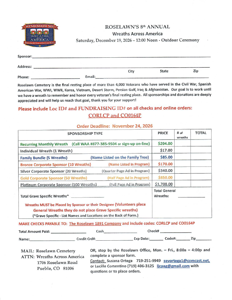 Click for a larger view and to download
Thank you - I'm a phone call away if you have questions,
Lucille Corsentino
719-406-3125 cell